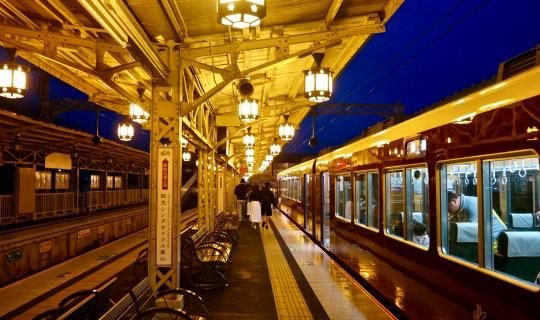
Getting around Tokyo from your hostel might seem like a daunting puzzle at first glance, a sprawling metropolis with countless train lines and stations. But here's the secret: it's surprisingly simple, intuitive, and incredibly efficient once you grasp a few core principles. Forget endless taxi queues or confusing bus routes; Tokyo's public transportation system is a masterpiece of punctuality and connectivity, designed to get you wherever you need to go with minimal fuss.
I spent a week navigating Tokyo, primarily on its trains and subways, and it was one of the smoothest big-city travel experiences I've ever had. From the moment you tap your card at a bustling Shibuya station to disembarking in a quiet residential neighborhood, the system just works. This guide will arm you with everything you need to confidently explore Tokyo, right from the doorstep of your Tokyo hostel.
At a Glance: Your Tokyo Transit Cheat Sheet
- IC Cards are Essential: Grab a Suica or PASMO card immediately. They're your ticket to everything.
- Google Maps is Your Co-Pilot: Seriously, rely on it for real-time directions, line colors, and exit numbers.
- Public Transport is King: Trains and subways are fast, affordable, and punctual. They're your primary mode.
- English is Everywhere: Don't stress about the language barrier; signs and announcements are clear.
- Walking is Great, Too: Explore neighborhoods on foot – it's often the best way to discover hidden gems.
Your Best Friend: Tokyo's Public Transportation System
Tokyo boasts one of the world's most extensive and reliable public transportation networks. Think of it as a vast, intricate web of arteries pumping life through the city, and you, the traveler, get to ride along effortlessly. The vast majority of your intra-city travel will be via trains and subways.
The Magic of IC Cards: Suica & PASMO
Forget fumbling for cash or deciphering ticket machines every time you ride. Your first mission upon arrival should be to acquire an IC card. These rechargeable smart cards—like Suica (issued by JR East) or PASMO (issued by non-JR companies)—are absolute game-changers.
How they work:
You simply tap your card on the reader when you enter a station, and tap it again when you exit. The correct fare is automatically deducted. No calculations, no stress.
Where you can use them:
IC cards are incredibly versatile. They cover:
- All JR train lines (including the famous Yamanote Line)
- All Tokyo Metro and Toei subway lines
- Local buses
- The Tokyo Monorail
- Convenience stores, vending machines, and even some restaurants for small purchases
Where to get one:
You can purchase a Suica card at any JR station ticket machine or office, and a PASMO card at any non-JR station ticket machine or office. You'll pay a small deposit (usually 500 yen), which is refundable when you return the card. Load it with a comfortable amount (say, 2,000-3,000 yen to start), and top it up at any station ticket machine or convenience store (look for the IC card logo) when needed. Many other major Japanese IC cards (like Icoca, Kitaca) are also compatible, so if you already have one from another region, you're good to go.
A crucial note: IC cards do not cover long-distance bullet trains (Shinkansen) or certain express limited trains. For those, you'll need separate tickets.
Your Indispensable Navigator: Google Maps
If IC cards are your key, Google Maps is your map. Seriously, download the offline map for Tokyo before you arrive (though Wi-Fi is widely available). It's incredibly accurate and user-friendly, providing:
- Real-time directions: Shows you the fastest route, including transfers.
- Specific line names and colors: Crucial for navigating Tokyo's labyrinthine system.
- Platform numbers: Tells you exactly where to wait.
- Travel times: Accurate estimations, usually down to the minute.
- Estimated fares: Helps you keep track of spending (though your IC card handles it automatically).
- Most importantly, exit numbers: Tokyo stations are massive, with dozens of exits. Google Maps will guide you to the exact exit closest to your destination, saving you precious time and many steps underground.
Just plug in your destination, select the public transit option, and follow the instructions. It will even tell you if a line is delayed (rare, but it happens).
Understanding the Network: JR vs. Subway (and Why It Doesn't Really Matter for You)
Tokyo's public transport system is operated by various companies, which can look confusing on a large map. However, as a visitor relying on an IC card and Google Maps, the operational differences are largely irrelevant. Your IC card works across almost all of them, and Google Maps does the complex route planning for you.
Here's a quick overview:
- JR Lines (Japan Railways): These are mainline trains, but many also function as crucial city routes.
- The JR Yamanote Line: This is your golden ticket. A circular loop line connecting Tokyo's major hubs like Shibuya, Shinjuku, Ueno, Tokyo Station, and Akihabara. It's often the fastest and easiest way to get between popular areas. Think of it as Tokyo's central nervous system.
- Other important JR lines include the Keihin-Tohoku, Chuo/Sobu (Local), Chuo (Rapid), and Saikyo Lines, which crisscross the city.
- Subways (Tokyo Metro & Toei Subway): These 13 lines (9 by Tokyo Metro, 4 by Toei) dive deep into central Tokyo, providing dense coverage, especially within and around the Yamanote Line loop. They're excellent for reaching destinations slightly off the main JR hubs.
Private Railway Companies: Connecting Beyond the Core
Beyond JR and the subways, numerous private railway companies (e.g., Tokyu, Tobu, Odakyu, Keisei) link Tokyo to its outer regions and surrounding prefectures. While you might use them for day trips (e.g., to Hakone or Nikko), your IC card will still largely cover these lines for travel within Tokyo's city limits. Google Maps will seamlessly integrate these into your routes too.
Getting to and From the Airport
Tokyo is served by two main international airports, and getting to your hostel from either is straightforward.
Narita International Airport (NRT)
Narita is further out, about 60 kilometers from central Tokyo, and handles most long-haul international flights.
- Narita Express (N'EX): This is often the most comfortable and convenient option. It's a direct, reserved-seat train to major stations like Tokyo, Shinjuku, Shibuya, and Ikebukuro. Travel time is usually 1 to 1.5 hours. You can buy tickets at the JR ticket office at Narita.
- Keisei Skyliner: Another excellent, fast option, connecting Narita to Ueno and Nippori stations in about 40-50 minutes. From Ueno/Nippori, you can easily transfer to JR lines or subways.
- Limousine Bus: These offer direct service to many major hotels and some bus terminals, which can be convenient if you have a lot of luggage, but they can get stuck in traffic.
Haneda Airport (HND)
Haneda is much closer to central Tokyo (about 15-20 kilometers) and handles more domestic flights, alongside a growing number of international routes.
- Tokyo Monorail: Connects Haneda directly to Hamamatsucho Station (a major JR Yamanote Line stop) in about 15-20 minutes. From Hamamatsucho, you can easily transfer. Your IC card works here!
- Keikyu Line: Offers direct access from Haneda to Shinagawa Station (another major JR Yamanote Line hub) in about 15-20 minutes, with some trains continuing directly onto subway lines. Your IC card works here too.
Taxis/Private Transfers from Airports: These are the most expensive options but offer maximum comfort, especially with heavy luggage, young children, or if you're traveling as a group (3-4 people might find it cost-effective if splitting the fare). A private transfer can be pre-booked for a fixed price, avoiding any language issues or potential taxi queues.
Alternative Ways to Get Around Tokyo
While public transport is king, sometimes you'll want other options.
Walking: Your Best Discovery Tool
Tokyo is an incredibly walkable city, particularly within neighborhoods. You'll find yourself averaging thousands of steps daily, and that's a good thing! Walking allows you to stumble upon charming side streets, quirky shops, and hidden eateries that you'd miss underground.
Pro-tip: Combine walking with public transport. Take the train to a neighborhood, explore it on foot for a few hours, then hop back on the train to your next destination. This is how I discovered countless local gems and truly felt immersed in the city's vibe.
Taxis & Uber: When Convenience Trumps Speed
Taxis in Tokyo are impeccably clean, the drivers are professional, and they're generally less expensive than in many Western cities. However, for daily city travel, they are often less efficient than the subway due to heavy traffic.
When to consider a taxi:
- Late at night: After the last train (usually around midnight to 1 AM), taxis become your only motorized option.
- Heavy luggage: If you're moving between hostels or have just arrived and want to avoid stairs.
- Groups: If you're 3-4 people, splitting a taxi fare can sometimes be comparable to public transport, especially for shorter distances or when connections are awkward.
- Directness: Sometimes a taxi offers a direct route where public transport requires multiple transfers.
Uber in Tokyo: Uber operates by calling a regular taxi. You get the convenience of cashless payment and price estimates, but the pricing is still meter-based, and traffic will affect travel time.
Private Driver: The Luxury Option
This is the most expensive way to get around Tokyo and generally not necessary for independent travelers given the city's superb public transport.
When a private driver might be justified:
- Families with young children: Avoiding crowded stations and multiple transfers can be a blessing.
- Mobility issues: Offers door-to-door convenience without navigating stairs or long walks.
- Group sightseeing: For a full day of touring with a set itinerary, it offers maximum comfort and efficiency, especially if you have a larger group.
- Business travelers: For specific appointments where time is paramount.
Passes & Tickets: Why IC Cards Usually Win
You'll see various day passes advertised, and while they might seem like a good deal on paper, for most visitors, prepaid IC cards (Suica/PASMO) are more cost-effective and convenient.
Single Tickets
You can always buy individual paper tickets at stations. These are often cash-only. You need to know your destination and the correct fare, which can be a small hassle. Best to avoid this if you have an IC card.
Day Passes
Tokyo has a few day pass options:
- Tokyo Free Kippu (Tokyo Combination Ticket): Around 1600 yen. Covers all JR lines, Tokyo Metro lines, Toei Subway lines, Toei buses, and Toei Streetcar for one day. Sounds comprehensive, but often you won't use it enough to justify the cost over an IC card, unless you're truly crisscrossing the city non-stop.
- Tokyo Subway Ticket (for foreign tourists): This is available in 24, 48, or 72-hour versions (800-1500 yen). It covers all Tokyo Metro and Toei Subway lines, but not JR lines (like the Yamanote Line). This is a good option if your itinerary heavily favors subway-only travel, but many popular spots are on JR lines.
- Individual Subway Company Passes: E.g., Tokyo Metro 24-Hour Ticket (700 yen). These are even more restrictive, only covering one company's lines.
The Verdict on Day Passes:
Unless you have a meticulously planned itinerary that involves an extraordinary amount of travel on specific lines, an IC card almost always comes out on top. It offers unparalleled flexibility, covers virtually all transport, and can be used for small purchases. Most tourists won't break even on day passes.
Japan Rail Pass (and JR Tokyo Wide Pass)
The popular Japan Rail Pass (and regional versions like the JR Tokyo Wide Pass) is fantastic for long-distance travel across Japan. However, it is typically not needed for getting around within Tokyo city itself.
- It's valid only on JR trains (including the Tokyo Monorail), not on subways or other non-JR private lines.
- For solely navigating Tokyo, an IC card is far more versatile and cost-effective.
- If you do have a JR Pass for broader Japan travel, you can certainly use it on JR lines within Tokyo (like the Yamanote Line). Just remember to combine it with an IC card for subway travel.
Language Barrier? What Language Barrier?
One of the most pleasant surprises for many visitors is how easy it is to navigate Tokyo's transport system despite not speaking Japanese.
- English Signage: All train and metro stations have clear English signs for station names, line names, and directions to platforms and exits.
- English Announcements: On trains and in stations, announcements are made in both Japanese and English, informing you of the next stop and important transfers.
- Numbered Exits: As mentioned, Google Maps will tell you exactly which numbered exit to use, making it virtually impossible to get lost above ground.
So, relax. Your lack of Japanese proficiency will not be an obstacle to confidently getting around.
Final Tips for Seamless Tokyo Travel
- Rush Hour (7:30 AM - 9:30 AM & 5:00 PM - 7:00 PM): While efficient, trains can get extremely crowded during these times. If possible, plan your travel to avoid peak rush hours, especially with large luggage.
- Train Etiquette: Be mindful of local customs. Keep conversations quiet, offer seats to the elderly or pregnant, and avoid eating or drinking on trains. Let people off before trying to board.
- Lost Property: If you lose something on a train, there's a good chance it will be turned in. Head to the station master's office or the relevant company's lost and found.
- Wi-Fi: Many stations offer free Wi-Fi, and cafes or convenience stores are also good spots to hop online if you don't have a local SIM or portable Wi-Fi device.
Exploring Tokyo from your hostel is an adventure that begins the moment you step out the door. Armed with an IC card, Google Maps, and this guide, you're not just getting around; you're unlocking the city's vibrant rhythm and endless discoveries. Enjoy the ride!